
Portfolio / 2026 Edition --:--:-- EST Atlanta · Miami

Nicholas Moffett

Nicholas Moffett

A senior at the University of Miami, building the AI workflows so humans can do the interesting work — not the manual data entry.

A little about me,
since you're here.

A senior at the University of Miami building at the intersection of AI, automation, and the businesses that need both.

I enjoy finding manual, repeatable processes and building automated versions of them. That instinct started at Eduply, where I built AI tools for educators later adopted by Atlanta Public Schools and Georgia Tech, and sharpened at SK Commercial Realty, where a request for a faster stacking-plan template became the seed for N&S Digital, the firm I co-founded to ship StackingPlanner and Scholairly.

Now, as an Investment Intern at Goldenrod Companies, I build AI workflows for market research, reporting, and deal analysis. I'm working toward a career in financial analysis because expertise and AI fluency have to grow together: AI can generate an answer instantly, but only real domain knowledge tells you when it's wrong.

Selected experience.

Click any role to expand.

/01
Goldenrod Companies
Investment Intern, Real Estate Tech
Jan 2026 — Present
  • Built automation pipelines using n8n, OpenAI, and Claude that transform raw tenancy schedules into structured Excel financial models.
  • Engineered prompt systems and scripts extracting submarket comps, property data, and lease info, reducing hours of manual analysis to minutes.
  • Integrated spreadsheet templates with AI workflows for streamlined internal data processing.
/02
N&S Digital LLC
Co-Founder
Apr 2025 — Present
  • Built StackingPlanner.com, automating commercial real estate stacking plans with interactive visual layouts and saved dashboards.
  • Created scholairly.com — an AI-powered EdTech platform that reached 147 student signups.
  • Owned the full product lifecycle: conception, development, launch, and user adoption.
/03
SK Commercial Realty
Commercial Real Estate Intern
Jul — Aug 2025
  • Sat in development meetings for major assets including a $500M mixed-use project in Atlanta (The Henry).
  • Built a full-stack web app automating manual stacking plans, replacing Excel with interactive visualization.
  • Built comprehensive financial models evaluating cap rate, LTV, amortization, and leasing commissions.
/04
Eduply
Generative AI Prompt Engineer
May 2024 — May 2025
  • Built AI chatbots adopted by Atlanta Public Schools and Georgia Tech for curriculum planning.
  • Created a video lesson planner tool generating tailored lesson plans for educators and administrators.
  • Optimized prompts for AI tools integrated into school systems, enhancing educator effectiveness.
/05
YMCA Camp High Harbour
Program Director — Watersports
Seasonal · 2021 — 2025
  • Directed all watersports programming, safety procedures, and staff management for 200+ campers and 80+ staff.
  • Oversaw a waterfront facility with 7 speedboats and $1M+ in equipment, mentoring counselors while keeping schedules and risk management on track site-wide.
  • Led watersports at a nationally recognized camp — Newsweek named Camp High Harbour one of America's Best Summer Camps in 2024.
/06
Acadomia & JC Academy Miami
Tutor
Aug 2024 — Dec 2025

What I've built.

Click any project to expand.

StackingPlanner

Visit ↗
The Problem

At SK Commercial Realty, I watched analysts rebuild the same stacking plan in Excel for every property. Hours of manual work for a static file nobody could share, update, or search without starting from scratch.

What I Built

The President of SK Investment Group asked for a better Excel template. I built a full-stack SaaS instead: it turns any tenancy schedule, messy or clean, into an interactive, color-coded building chart in seconds, with a natural-language AI assistant built in from day one.

Highlights
  • AI-powered Excel parser ingests messy, non-standard rent rolls — no fixed template required
  • Natural-language AI assistant reconfigures colors, labels, fonts, and per-block overrides on request, and can flag ROFR encumbrances and rights per suite
  • Shareable public plan links with live chart rendering, plus named version-history snapshots for any plan
  • Stripe-gated Pro tier unlocks logo upload, Modern/Bubbly chart styles, custom fonts, and PDF/PPTX export
  • Persistent Python chart worker — fast, cold-start-free rendering
Stack
Node.js React Python Claude AI Supabase Stripe EC2 Resend

Career Dashboard

Visit ↗
The Problem

Job searching means a spreadsheet for applications, a doc for cover letters, and no real signal on which postings are worth your time or how you actually stack up against them.

What I Built

A tracker-first job dashboard built around two AI features that earn their place: an in-depth fit score on any job you import, and a coach that actually knows your background. Multi-user with no accounts and no API key to bring — every visitor gets their own scoped data from a 3-step setup.

Highlights
  • Import a job from a URL, pasted text, or a screenshot: an AI pass extracts the structured fields, handles JS-rendered listings automatically
  • 5-category AI fit scorecard, gap analysis, tailored resume bullets, and a cover letter draft with tone/angle controls — auto-generated per job
  • Free Priorities strip ranks deadlines and stale follow-ups by urgency with zero AI calls; Coach overlay adds persistent-memory chat for everything else
  • Candidate Strength: rubric-scored readiness assessment, point values anchored via structured outputs so repeat scores don't drift
  • No accounts, no API key: a 3-step setup collects your background and drops you straight into the tracker
Stack
Next.js TypeScript Turso Groq Vercel

AI Automation Suite

Internal Build
The Problem

Investment analysts at Goldenrod Companies were losing hours per deal to repeatable manual work: re-keying tenancy data into models, then hunting across scattered sources for market context before any real analysis could start.

What I Built

An internal AI toolkit that keeps growing as new bottlenecks come up: n8n pipelines that turn raw tenancy schedules into structured Excel financial models, and a market intelligence portal that pulls demographic, employer, and real estate data for any market into one AI-written brief.

Highlights
  • Automated extraction of submarket comps, property data, and lease terms — no manual data entry
  • Prompt system queries OpenAI and Claude for structured field extraction, feeding existing Excel templates directly
  • Market intelligence portal aggregates employer, demographic, and real estate data per market behind company login, with an AI-generated narrative brief
  • Reduced multi-hour manual analysis to minutes per asset
Stack
n8nOpenAIClaudeFastAPIExcel

StockStarter

Visit ↗

No signup — upload a statement (synthetic is fine) and it stays in localStorage on your device, nowhere else

The Problem

I wanted real performance tracking (TWR, IRR, tax-loss harvesting, income) and kept running into the same two bad options everyone does: pay a service that wants your account credentials, or do it by hand in a spreadsheet.

What I Built

A web app that turns broker export files into real portfolio analytics. Upload an Excel or CSV and it resolves holdings, pulls live prices, and tracks performance, income, risk, and taxes, with an AI chat layer to ask about your portfolio in plain English. Your transactions are parsed and stored entirely in the browser — no account, no login, no server-side database of anyone's holdings.

Highlights
  • Time-weighted return and dollar-weighted IRR computed from actual cash-flow history, not estimated
  • FIFO/HIFO tax-lot tracking with wash-sale risk flags and estimated tax savings
  • Built-in AI chat grounded in live holdings, prices, and transaction history
  • Open source and self-hostable, but the live demo needs none of that — data never leaves your browser's local storage
Stack
Bun TanStack Start localStorage Tailwind Claude AI

scholairly

Visit ↗
The Problem

I kept watching students juggle a different app for every task: one for notes, one for flashcards, one for the syllabus PDF, one for the calendar. Nothing tied it together.

What I Built

So I built scholairly, one platform with AI tools built around how students actually study: class-specific chatbots, syllabus analysis, auto-generated flashcards and practice tests, a scheduling assistant, and a document Q&A tool for asking questions straight out of a PDF.

Highlights
  • Class-specific AI chatbots, syllabus analysis, and auto-generated flashcards and practice tests
  • 147 students and educators signed up over its run
  • Built and launched end-to-end — conception through user adoption
Stack
Generative AISaaS

Signal

Visit ↗
The Problem

I kept defaulting to asking an AI assistant to "put this on my calendar" — there was no single fast place to capture a task, a deadline, or a someday idea, and no quick way to see what actually mattered today without re-triaging everything myself.

What I Built

A personal capture tool, installed as an iPhone home-screen PWA plus a Scriptable widget, that unifies three kinds of entries under one fast-capture flow: fixed-time events pushed one-way to Google Calendar, deadline tasks whose urgency auto-escalates as the date nears, and someday/backlog items that just sit until touched. A daily "pick your signal" ritual is the only manual triage step. Passcode-gated for personal use.

Highlights
  • Exactly one manual priority decision — urgency is computed automatically from date proximity, not hand-triaged
  • iPhone home-screen PWA + Scriptable widget for one-tap capture from anywhere
  • One-way sync pushes fixed-time events straight to Google Calendar
  • AI condenses long freeform notes into a clean title, keeping the full text as an expandable detail
  • Daily push reminder nudges the triage ritual — silent once you've already picked today's Signal
Stack
Next.js TypeScript Turso Groq Web Push Vercel

World Cup Kits

Visit ↗
The Problem

I wanted one place with a nation's complete World Cup story — kit history, the real match record, and the stories behind each tournament — instead of piecing it together across a dozen Wikipedia tables.

What I Built

A reference archive covering every nation that's ever appeared at a World Cup, built around an autonomous pipeline rather than manual entry: an AI research agent works a queue of 83 countries, researching each one from Wikipedia and Wikimedia Commons and writing a structured JSON file. A Node.js watcher picks up new files, converts them, patches them into the site, and commits and pushes straight to production — no manual step between research and a live deploy.

Highlights
  • 83 of 83 nations fully documented — every country to ever appear at a World Cup, 1930 to 2026
  • 78.5% of tournament entries carry an archival kit photo sourced from Wikimedia Commons — only set when a freely-licensed match exists, never guessed
  • Fully autonomous pipeline: research agent → structured JSON → file watcher → git commit and push → live Vercel deploy
  • Per-country dashboard computed straight from match data: win/loss record, biggest win and loss, head-to-head rival history, top scorers
  • Editorial per-tournament stories alongside the raw stats — kit lore, iconic matches, not just numbers
Stack
React Vite React Router Node.js Vercel

Hacky Sack CV

View Code ↗

A computer vision pipeline for hacky sack gameplay video: YOLOv8 pose tracking plus ByteTrack follows each player, a Kalman filter smooths the sack's flight through occlusion, and touch/drop detection combines proximity with a velocity-inflection check instead of distance alone. Still early — no trained sack detector yet, so it falls back to color-threshold detection for now.

Highlights
  • YOLOv8 pose model + ByteTrack keeps a persistent ID per player across the clip, tracking ankle, knee, and chest keypoints every frame
  • Constant-velocity Kalman filter smooths sack tracking through occlusion and short misses instead of losing the trail
  • Touch detection checks proximity to a keypoint and a downward-to-upward velocity inflection, not distance alone — cuts down false positives
  • Sack detection falls back gracefully: a trained YOLO model first, then HSV color-threshold blob detection, so it never hard-fails on unlabeled footage
  • Ships a synthetic test-clip generator so the whole pipeline is verifiable before pointing it at real footage or training a detector
Stack
Python YOLOv8 (Ultralytics) ByteTrack OpenCV
Older builds, no longer live
ToonaTools AI tools built for the counselors at the summer camp I worked at — generated devotionals and activity plans, and filled in counselor evaluations digitally instead of on paper.
Steal the Meal Scraped local fast food menus to surface the best nearby deal. Never quite worked well enough to use.

Life outside the laptop.

Hover to pause, drag to explore.

Nicholas with family

Family & friends

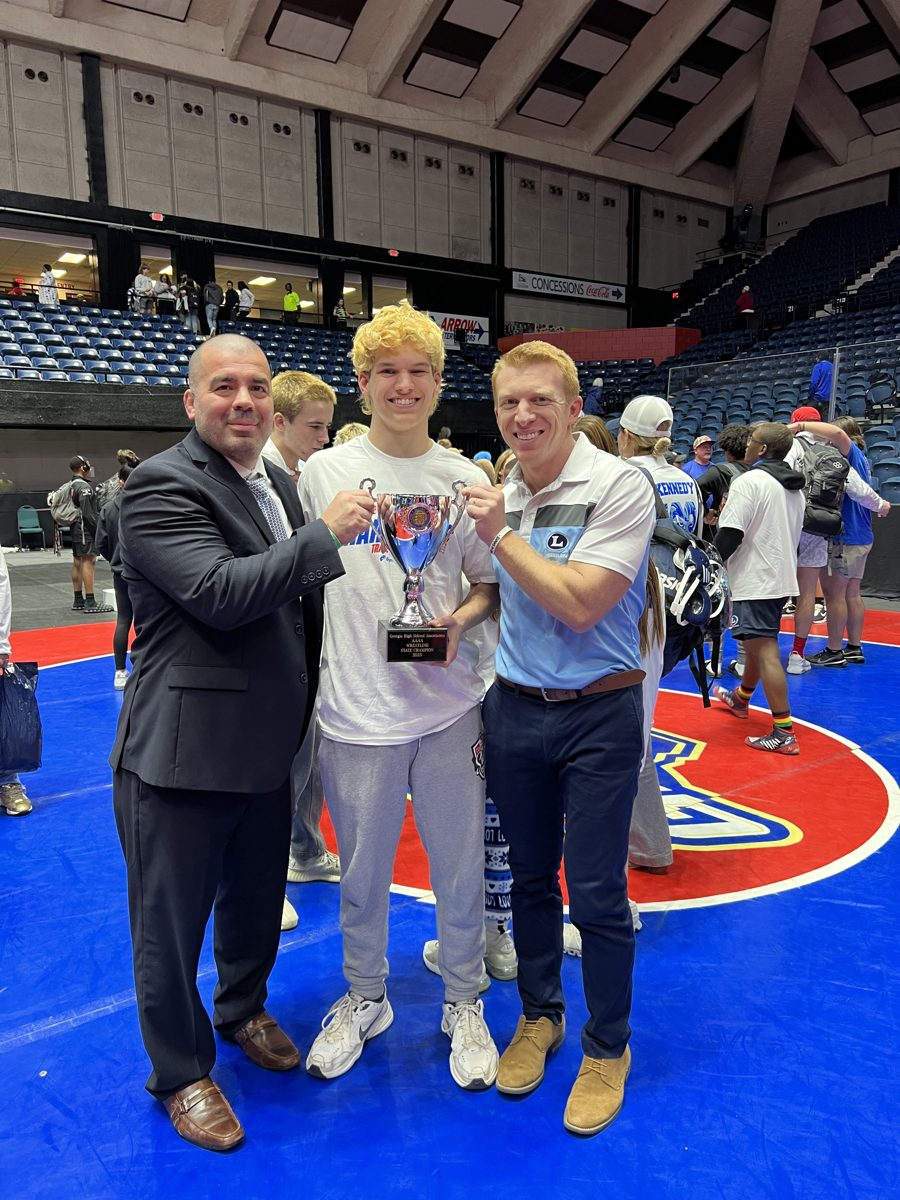
Nicholas at a wrestling tournament

Wrestling

Nicholas wakeboarding

UWake

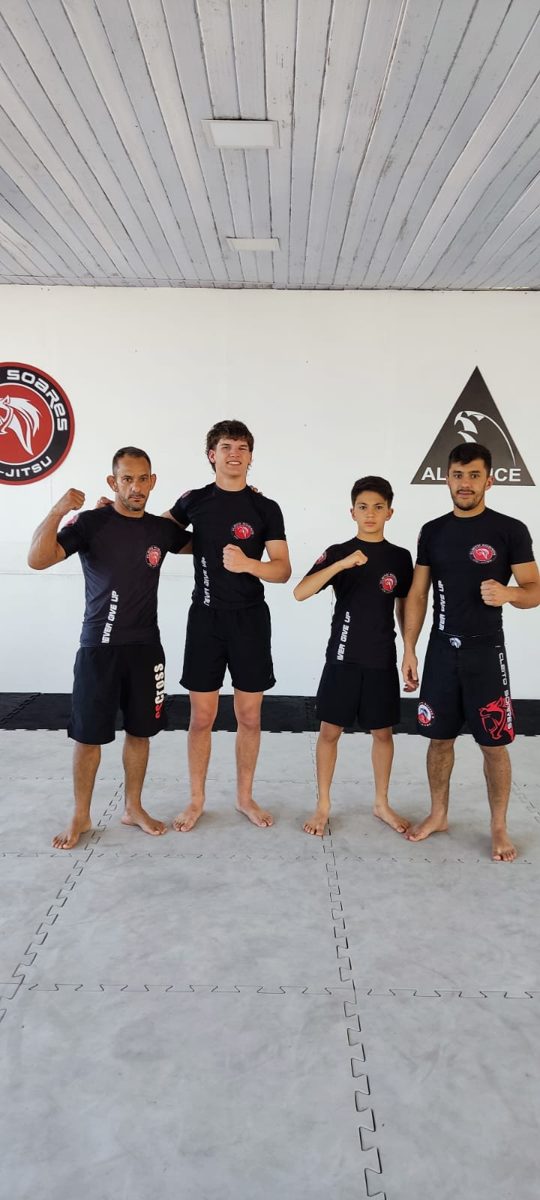
Nicholas at Soares Jiu Jitsu

Brazilian Jiu Jitsu

Nicholas with friends at the beach in Miami

The Beach

An AR side project visualizing a water molecule

Side projects

05 — Contact

Have a project, a job, or just a good idea? Let's talk.